Signs you or your child may benefit from a consultation
If several of these apply, call Kathleen for a complimentary phone consultation — no referral needed.
What open mouth posture looks like
Chronic open mouth posture produces recognizable physical characteristics that often develop gradually — and are frequently mistaken for unrelated conditions. These are visible signs that the tongue, lips, and airway are not functioning correctly at rest.
Open, dry lips
The lips rest apart rather than together, causing chronic dry mouth and vulnerability to dental decay and gingivitis.
Short upper lip / gummy smile
The upper lip appears short or tight, and the gums are prominently visible when smiling.
Droopy lower lip
The lower lip hangs loosely, often slightly everted, reflecting weak orbicularis muscle tone.
Recessed, dimpled chin
The chin has a golf-ball texture from the mentalis muscle straining to help close the lips — a muscle not designed for that job.
Dark circles under the eyes
Sometimes called "allergic shiners," these can reflect disrupted sleep and nasal congestion associated with mouth breathing.
Nasal salute line
A horizontal crease across the middle of the nose from repeatedly pushing the nose upward to relieve nasal congestion.
Long face / facial asymmetry
Chronic low jaw and tongue posture can lead to increased vertical face height ("long face syndrome") and uneven muscle development.
Narrow upper palate
Without proper tongue pressure against the palate, the maxillary arch narrows — leading to crowded teeth and a compromised nasal airway.
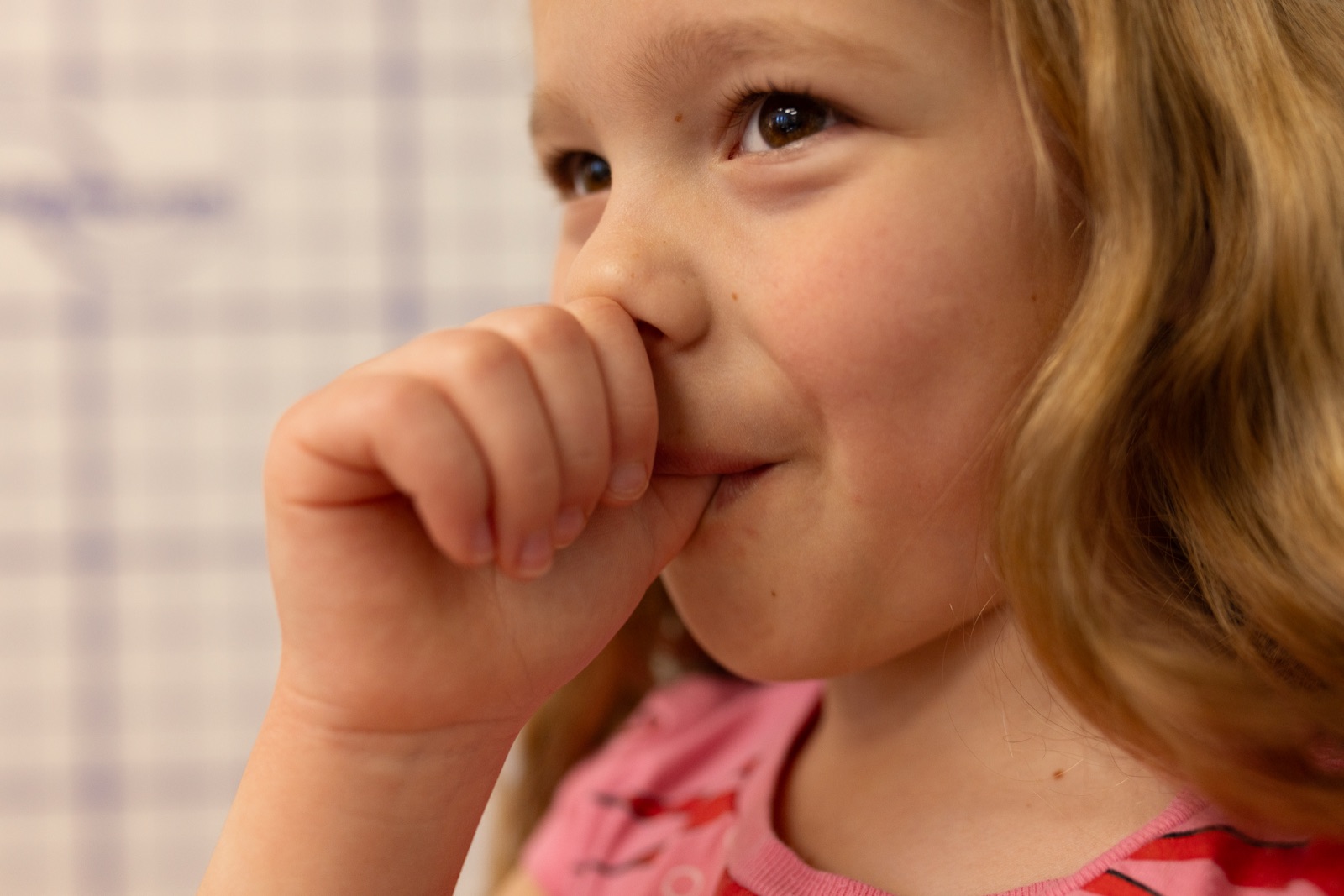
Thumb & finger sucking
Normal in infancy, but prolonged sucking past ages 3–4 disrupts the balance of forces that guide dental and facial growth. The pressure and suction can permanently reshape the upper arch and alter how permanent teeth erupt.
Overjet
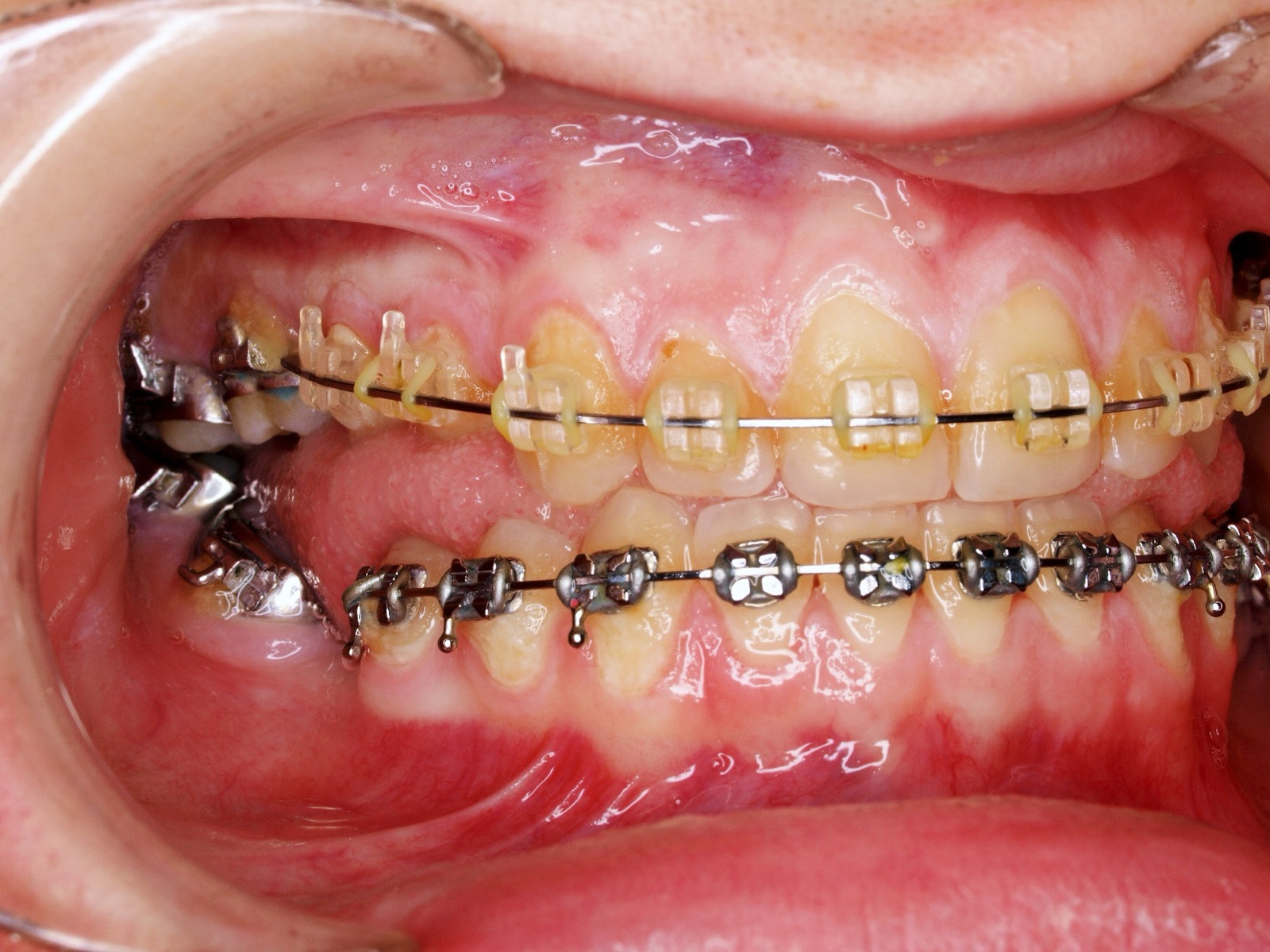
The thumb pushes upper front teeth outward and lower teeth inward, creating protruding "buck teeth."
Open bite
A gap forms between the upper and lower front teeth, often from forward posturing of the tongue. The lack of front teeth occluding and contacting prevents biting food and the proper start of chewing and swallowing.
Narrowed palate
A narrow palate can be the result of sustained pressure from restrictive buccal (cheek) ties along with low tongue posture, also contributing to crowding, crossbites, and airway restriction.
Tongue thrust
Without normal arch shape, the tongue learns compensatory swallowing patterns that perpetuate dental problems.
Habits that can contribute to OMDs
Mouth breathing
Keeping the mouth open alters tongue posture, lowers jaw position, and over time changes facial structure and airway development — and forced/retracted growth of the lower jaw.
Prolonged pacifier use
Use beyond 6 months of age is not recommended. Prolonged use applies forces similar to digit sucking — narrowing the arch and promoting forward tongue posture.
Nail biting
Creates uneven forces on teeth and can damage tooth enamel. It also brings about changes in jaw development and potential development of TMJD. Often co-occurs with tongue thrust and other oral habits.
Lip biting & sucking
Habitual lip involvement alters the muscle balance around the mouth and can cause dental and soft tissue changes over time.
Hair / clothing sucking
Self-soothing habits that involve oral contact can create oral-motor patterns similar to digit sucking when persistent.
Bruxism (grinding)
Nighttime teeth grinding is often connected to airway issues and improper tongue posture — OMT addresses the underlying cause, not just the symptom.

Habit elimination is a core specialty
Kathleen's first clinical course instructor was Rose Van Norman — considered the "guru" of digit sucking cessation. Habit elimination is thoroughly integrated into Kathleen's OMT practice, with a compassionate approach that works for children and adults alike.